I live and work by this idea: We can all learn from immigrants.
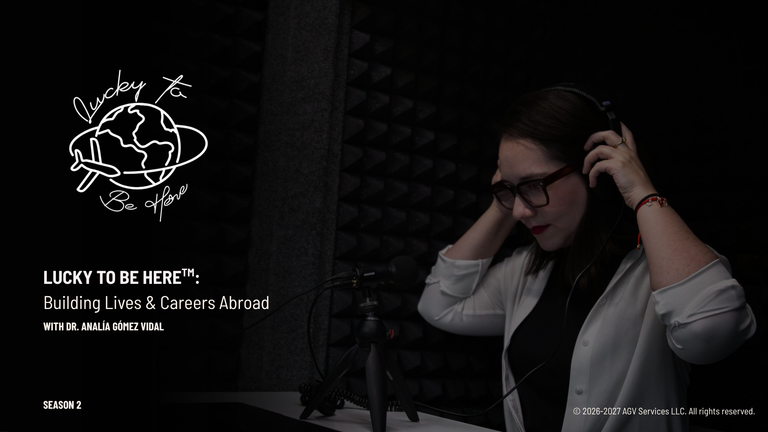
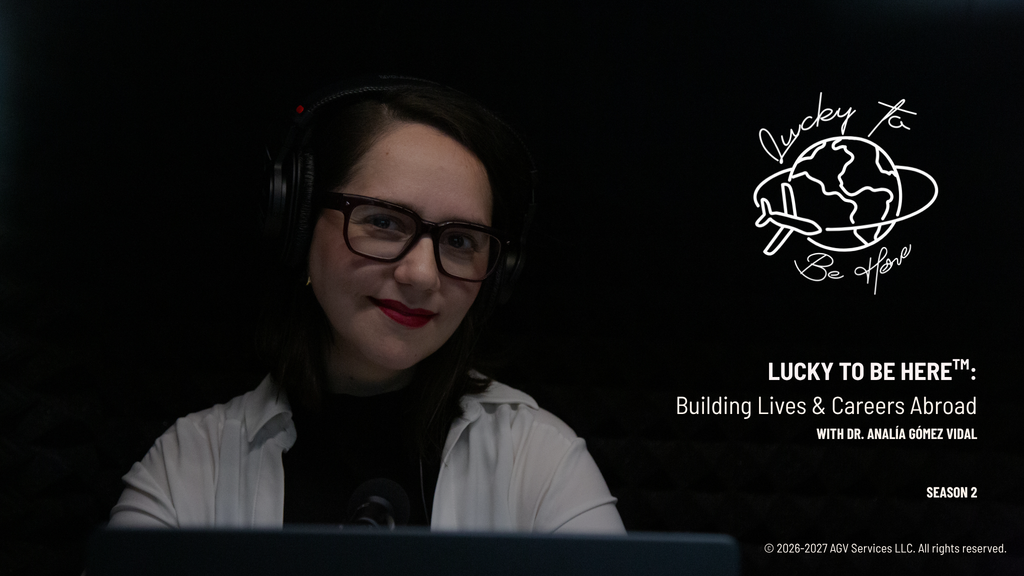
Creating and hosting Lucky to Be Here, a podcast that showcases stories of people who have built lives and careers across industries and countries, has only reinforced this. It has also helped me see the ways in which these lessons also play out in my growing experience as a podcaster. Interestingly enough, the end of International Podcasting Month also marks the first anniversary of Lucky to Be Here, and coincides with the start of Season 2 of our podcast.
Today, I want to share with you the four lessons I highlighted in our recap episode of Season 1 on what we can all learn from immigrants, and how these lessons matter for us as podcasters, no matter where we are located. These four lessons speak to our internal experiences as much as the interpersonal realities of our day-to-day lives.
OG Takeaway #1: You are never starting over, even if it feels like it
Podcasting version: Those experiences and skills you had before you sat in front of a mic (and camera) still matter.
This is a universal feeling that we all through at some point, regardless of our immigration status. It is almost automatic for us to feel as if you are starting over from scratch. I witness it most as part of my work as a career development professional, whether that is with individual or institutional clients.
But it is rarely true. What is most common instead is that everything you have learned, experienced, gained from all your past experiences comes with you wherever you are no matter the context. The situation might be different, uncomfortable, and even new… But you are more than the version of yourself that feels terrified. The challenge is to remind ourselves that even in the middle of our transitions, we are made of plenty of gifts.
As a podcaster, this also is true in countless ways. You may feel nervous about speaking in front of the mic (and camera, if you do video too), but you know those skills you have had over the years for writing talking points for yourself at meetings? They come in handy for scripting so you do not feel pressured to improvise your episodes. Remember those times where you were a project manager for your previous companies and needed to identify resources and milestones to plan ahead? Let me tell you about batch recording and post-production timelines…
You have what it takes because you both have experienced it in other contexts and because you have had to, at some point or another, see yourself as a beginner and a student of something very new, and managed to learn and thrive.
But there is a flip side to this takeaway, and that is our next one
OG Takeaway #2: You are going to feel like a stranger to yourself at times
Podcasting version: Embrace the discomfort while you learn from it.
This is true for any transition or change you embark in: The environment is not the only stranger in the story. You become one to yourself too sometimes. The important part is that you recognize that, and then you give yourself grace and space to meet yourself again. Mic on or off.
When I was a kid, no more than 5 or 6 years old, I would play with a cassette recorder (hello fellow millennials and older) and record myself and others around. Eventually I forgot about that and moved to record songs on the radio instead. But at some point, I got my first interview recorder as a beginner journalist, and then got access to the taped recordings of the radio show I was a part of as a college student.
Listening to myself was rough. First, do I even sound like that?! (I know many of us have wondered that). Then it was the details about what I said and how I said it, the usual filler words and expressions we all have. Over time, I got over that and kept going. But then I became a podcaster in English, and being bilingual does not exclude you from noticing your accent, or your expressions, and again, it felt uncomfortable at first. Looking at myself in video for extended periods of time was another adjustment. But now a year in…oh hi, look, that is me again on screen!
In other words, we all face that feeling of cringeness or discomfort or self-doubt when we first start, and that inner dialogue that likes finding flaws in ourselves becomes louder again because we do not recognize ourselves in that new context or space. The good news is that the more you remember that this is part of the process, the easier it becomes to overcome the doubt, the self-criticism, and the perfectionism. Even if you do not fully overcome it, you become more used to it, so it no longer holds you back the same way.
What connects these two takeaways is the challenge of feeling enough to take the steps while making room for the awareness that you are evolving. Nobody started in podcasting knowing all about it. In fact, many started without even knowing what they were building at the time.
We are not alone in this process and the challenges of it, and that connects to the third takeaway.
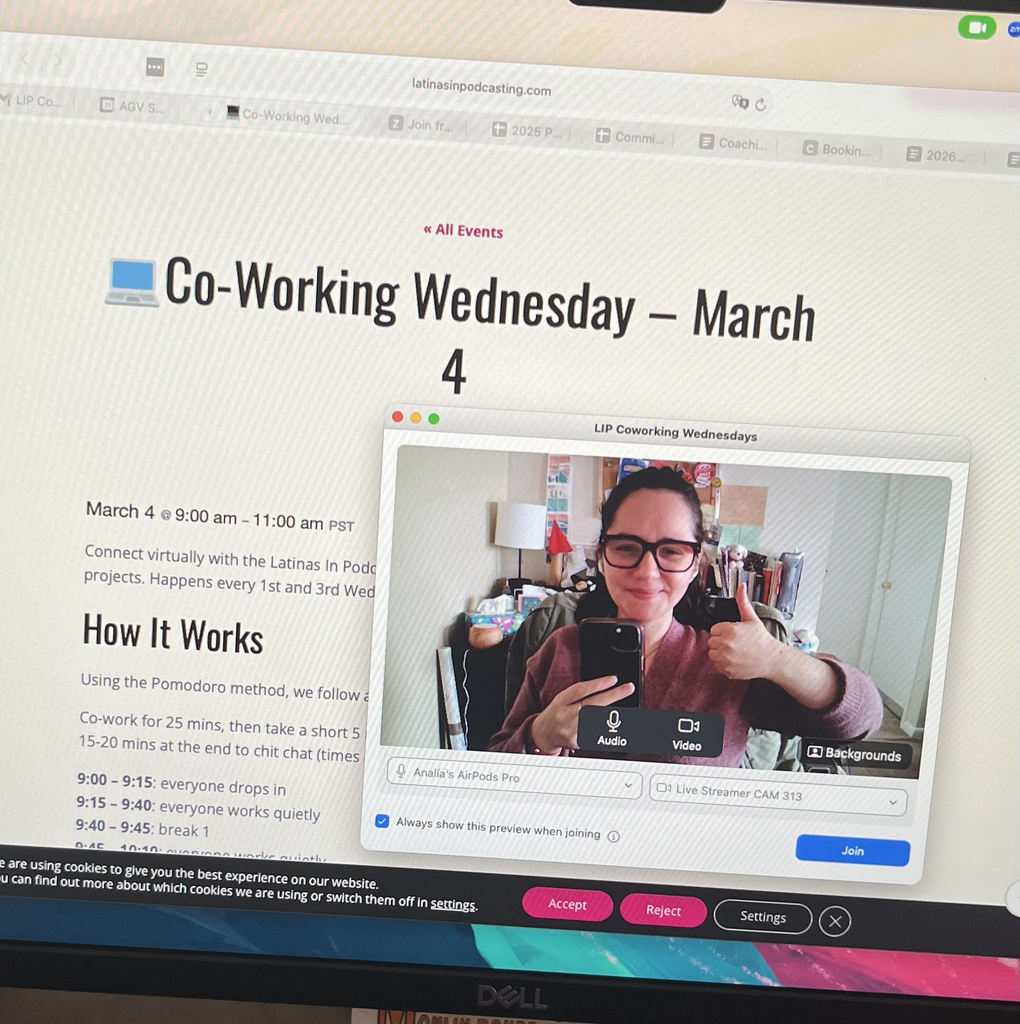
OG Takeaway #3: Community building is an essential part of the process that crosses all spheres of our lives
Podcasting version: Learning by doing is only one part. The other is who you learn with and from.
Community (and its lack thereof) shapes our experiences and uplifts us along the way as we face these internal stretching, too. That is true for all scenarios, and especially for podcasting. From those first friends and colleagues who are willing to be interviewed or who are your biggest supporters and promoters sharing your podcast, to the friend of a friend who has been doing it for a while and can tell you all about why hyperfocusing on what mic to buy is not worth it to get started. Communities like Latinas In Podcasting, and the relationship that we build through them, are essential in this process of learning from and with.
But when it comes to community, I like referring to it in a broader sense, the type of parasocial version of it that expands the “weak ties” that sociology research highlights. Like I mentioned a few lines ago, even those who got started in podcasting earlier on were figuring it out over time. Some of my favorite podcasts today belong to people I have been listening to for over a decade now, and in many ways, without them fully knowing, their growth taught me so I could be here now.
I am fully aware of how expansive and even loose this definition of community might be to many, but there are layers to it that are important, especially for us in creative and communicational spaces like podcasting. Because just as we do not do things alone, there is only so much we know about how our presence and work reaches others, and that is the fourth and last takeaway today.
OG Takeaway #4: Our choices also impact others, near and far
Podcasting version: Most people might not reach out, but trust and believe what you are doing multiplies.
Our choices, including creating, hosting, and contributing to podcasts, can open the door to many life-changing scenarios for us. But they do not only impact us as a result. We also happen to those around us, from loved ones to friends… and even listeners.
Podcasting can be hard at times, especially for small or solo teams, and even more so when you first get started. Those initial weeks and months when you start releasing episodes hoping that someone out there will subscribe, listen, rate, and review (please do, it really helps us!). If you have gone through it, you know how hard it can feel, almost as if speaking to a void without knowing whether it even matters. It is a massive leap of faith that requires you to endure for the long run with no immediate reward.
But then it happens. Every now and then, there might be a comment on your episode on YouTube, or an email from a subscriber who shares how much the latest episode and newsletter spoke to them. Or the long-time follower who responds to a call for feedback sharing how much your work has meant to them. Most listeners rarely reach out (if you are one, please do, it means the world for us and yes, you also make me tear up sometimes). But those nudges are essential to keep us going.
Against all my data-driven, type A tendencies, I did not set a goal or metric to reach when I first launched Lucky to Be Here. At the time of writing this, we are wrapping up the first full season (and its bonus season!) with over 3,400 streams across almost 50 countries. That is both humbling and thrilling.
Giving ourselves permission to dare, to pursue a vision of our lives that is different from what we know in any way is a very personal choice, but it does not happen in isolation. Podcasting, by default, is not a solitary endeavor, and while you may feel lonely at times (and joining podcasting communities like Latinas In Podcasting can help with that!), it is a journey that reaches others in ways that we may never fully grasp. That is the hope, and the fuel.
This is only one small part of what I have learned, and what we can all learn, from my first year of podcasting on immigrant stories. I am certain that there is more to come, too. Because podcasting, like immigration, is a journey that keeps on teaching us along the way.

Author: Analía Gómez Vidal
Dr. Analía Gómez Vidal, C.P.C. is the host of Lucky to Be Here, a podcast that showcases the stories of those who have built their lives and careers across industries and countries, like she did after moving from Argentina. She is a leading voice in career mentoring, specialized in international graduate students and professionals, and a sought-after consultant that blends high-level strategy and creative arts through her business, AGV Services LLC. You can find out more and connect with her at https://www.agvservicesllc.com